Tuesday, September 16, 2014

Growing pains

from Webster's Dictionary


growing pains

 noun plural
: pains in the legs of children who are growing
: the problems that are experienced as something (such as a business or a project) grows larger or more successful


Love it! I think we're conditioned to avoid pain. We're a feel good society. We recoil when we get uncomfortable, but that second definition tells us that if we're going to have the life we want, we've got to have some discomfort. It's important to know the difference between the pain of unhappiness and that from venturing into deeper waters and uncharted territory.

I find that my growing pains are mostly emotional. I have worn grooves in my mind by responding to many things and challenges in the same way. For instance:

When I'm very busy and feel it in my body, I always start fearing what's going to happen to me. I get scared that I might get sick. I look for trouble. I lay in bed thinking about how much I have to get done, then start counting the days till the busy is all over and I can get more rest. I'm very busy right now. On top of teaching high schoolers, I'm stretching myself to conduct creative writing workshops and participate in public readings.

But, this time I'm going to do it differently! Instead of getting scared because my schedule is tight, I'm going to flip the script and get excited. Let's see what happens if I choose to let some little things go so I can get to bed on time. I'll plan with a bit more detail so I can keep calm and healthy.

The other alternative is to run from the growing pains, get through the rough part in a blurred funk and pretty much return to the status quo. I'm not saying we should run ourselves ragged. But if we have a vision for where we want to go in life, or we have a passion that we want to pursue, we have to find a place for it. The tricky part is adjusting the old to make room for the new. Of being uncomfortable enough for things to change shape and direction, for our lives to morph into something we haven't experienced before.

I think it might be the only way to grow into the next phase of our journey. We won't know how to get to the new if we can't endure the growing pains with the right attitude.


Didn't read Salt in the Sugar Bowl yet? Order your copy today!  

And check my website for upcoming events.


Wednesday, September 3, 2014

Organic vs. Inorganic

This is a departure from my usual, but life is big and whole, and there are no compartments. Everything informs everything else. And health is a HUGE part of everything-- what's going on in our bodies, how much energy we have, even our emotionalism. There's also lots of speculation and research about how even our food can poison us. I like the idea of eating organic, but organic gets expensive, and I will often grab whatever fruit and vegetable looks good and healthy-- even if it is laden with invisible pesticides.

I ran into this information by Andrew Weil, and found it helpful. I put it on my fridge.

This is what Dr. Andrew Weil had to say about choosing organic in his "Daily Tips" blog:
"I encourage everyone to enjoy these fruits and vegetables in organic or conventionally grown form:
   Avocados
   Sweet corn
   Pineapples
   Cabbage
   Sweet peas (frozen)
   Onions
   Asparagus
   Mangoes
   Papayas
   Kiwi
   Eggplant
   Grapefruit
   Cantaloupe (domestic)
   Cauliflower
Sweet potatoes

According to EWG, common growing practices make the crops listed below the most likely to contain higher pesticide residues:
   Apples
   Strawberries
   Grapes
   Celery
   Peaches
   Spinach
   Sweet bell peppers
   Nectarines (imported)
   Cucumbers
   Cherry tomatoes
   Snap peas (imported)
   Potatoes

Plus these which may contain organophosphate insecticides, which EWG characterizes as "highly toxic" and of special concern:
   Hot peppers

   Blueberries (domestic)"

So, this takes some of the mystery out of making some organic vs. inorganic choices. I happen to love Dr. Weil. And now, he's saving me money!

Didn't read Salt in the Sugar Bowl yet? Order your copy today!  

And check my website for upcoming events.


Monday, August 11, 2014

It's never going to be perfect

Some of the deepest insights about life that I've encountered have been spoken by fictional characters. I ran across this line from a J. California Cooper novel which is definitely food for thought.

"Occasionally, actually quite often, someone will refer to a family or person as dysfunctional. Which, I believe, is a sign of ignorance, for the obvious reason that 70 or 80 percent of all the people who have ever lived were dysfunctional. The other 20 or 30 percent tried to be, or had sense enough to be, a little wiser. Among them, the greatest were disliked, hated, killed, or crucified. And they weren’t even perfect, except one."
— Opening sentence of “Life Is Short But Wide” by J. California Cooper


"Dysfunctional" is a term that is, indeed, used a lot. My take is that if we're raised by humans, we're going to have issues (which is really just another way of saying dysfunction)--because nobody's perfect. So when we accept that we are likely to have some burrs in our psyches, I contend that life gets easier.

Why? 

Because if we accept the imperfection of the human experience, we stop expecting to achieve TV love, an immaculate home, flawless performances, cookie cutter lives, or a personal status in which we have all the answers. We will also cut ourselves some slack, stop feeling sorry for ourselves, get beyond "Woe is me," and realize that life is tough all over. Sometimes it's a challenge to accept this mindset because the media bombards us with images of the perfection journey on which we should all be embarked! 

Once we get the "It's never going to be perfect mindset," we can finally develop realistic visions for authentic relationships; homes filled with real people; bodies that have grown and birthed people in them; jobs that are satisfying but are still a lot of work; or bank accounts that can't support a BMW, but that put food on the table.  That's what grounds us. That's what actually diminishes the level of dysfunction or the impact of issues.

Because the bottom line when it comes to dysfunction or having issues is that we, as individuals, elected to stick to a script that wasn't of our making. We chose to proceed blindly down a path designed by others instead of using our power to hack away the vines and stumps until we made our own.

Simply put, we can choose to live on purpose and commit to live examined lives. Not a life that requires a PhD in psychology, but one in which we take time to check ourselves when we:

  • try to control everything and everybody, 
  • nitpick about normal human behavior
  • blame others for imagined infractions
  • develop tendencies and habits that make life worse
  • become a doormat for anybody
  • use others as doormats
  • get so busy there's no time to think
  • let the external world destroy peace of mind
  • scare ourselves from fully participating in the myriad options that life presents
I have to check myself when I become critical, grumpy and hard-to-please. It's usually a sign that (internally) I'm not living up to some real or imagined standard I've placed on myself. The important message I usually get is that it rarely has much to do with the other person/people. It has to do with me. Because people are going to be who they are. And if (according to Cooper's character's assessment) 70-80% are dysfunctional, it's on me to get my own mind right so I can live a peaceful and satisfying life. 

Peace and love!


Get your copy of Salt in the Sugar Bowl! It's available from the publisher (Main Street Rag) or on Amazon. Find out how Sophia Sawyer's issues (inherited from a media-influenced mother) contribute to the abandonment of her six children.


Stay tuned for information about my writing workshops for teens and adults at the Neuse Regional Library Literary Festival in Kinston, NC on September 27, 2014.


Wednesday, August 6, 2014

Reorient yourself for a more peaceful existence


I've been writing so much these days that I decided to let these images speak for 
ways to stay peaceful and grounded.


Make decisions. Don't live on automatic. Always be mindful that the decisions we make reflect the power we have over our lives.


Face fears and dream. And they don't have to be big fears and dreams. They can be little ones-- like going to the movies by yourself once a month.


Be uniquely you. There's no perfect talent, size, fashion, or lifestyle. There's no one-size-fits-all lifestyle, so design your own.


Be tolerant. It really does take all kinds to make a world, and NOBODY is perfect.


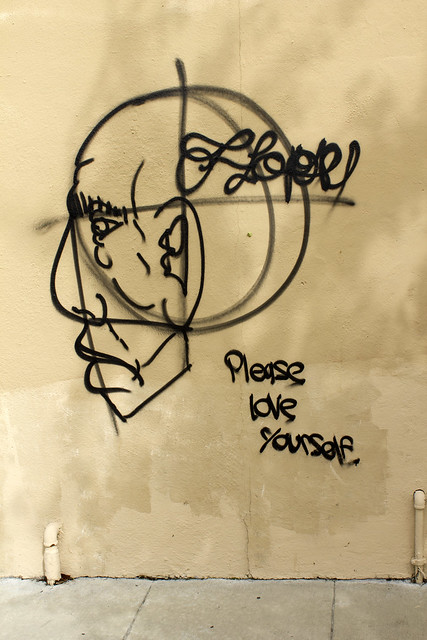
Love yourself-- warts and all-- because only then will you treat yourself with the loving kindness that allows you to make decisions and behave in ways that uplift and enhance your life.


Monday, July 14, 2014

Authenticity in action

In an interview following Terry McMillan's appearance at Quail Ridge Book Store in Raleigh, I was asked what was the most remarkable aspect of the event. It didn't take me long to respond. It was definitely her authenticity. (See this great article about the event. http://www.midtownraleighnews.com/2014/07/13/4003017/midtown-muse-mcmillan-brings-fresh.html)

For me, authenticity stands out as one of the most important values a person can live by.
Why? Because many people with abandonment issues have a hard time with being authentic.
Why? Because so many people with abandonment issues are codependent-- which makes them people pleasers.

I took this quote from the  mental health America website: "Codependents have low self-esteem and look for anything outside of themselves to make them feel better. They find it hard to 'be themselves.'"

Key phrase: They find it hard to be themselves. 

We sort of live in a society of copycats. There are so many ways not to be authentic:
- jumping on the latest bandwagon--in opinions, style, desires, speech, interests
- pretending not to care when you do
- pretending to care when you don't
- playing to the crowd instead of coming from the heart
- following a blueprint when it comes to emotions because that's how you're supposed to feel

(These 21 Quotes on Authenticity spell out what it's all about.)

So back to Terry McMillan. With plenty of time for questions from the audience, it was priceless to see her personality in action, in public. There was no posturing. I couldn't detect any censoring. I got the sense she was digging into herself to answer honestly and clearly. She was so off-the-cuff: with her facial expressions, with the information she chose to share, even with what she chose to read (A child was asked to leave the room because what she read wouldn't be appropriate for young ears). Love it!

Why was this important to me?

As a writer, I needed/need to believe that there is no "formula." We now have access to TED Talks, bulleted How To lists, and resources to prepare us for any topic/situation we can imagine. The fallout: an era of continuous searching for the right way to do it (whatever it is). Don't get me wrong, information is great-- as long as it doesn't kill our ability to be spontaneous, to trust our own instincts, to friggin' wing it.

So it takes a certain level of chutzpah to know your craft, be prepared, and just be comfortable-- without affectations or gimmicks.

What's the benefit of authenticity? Removing the filter between who you are and how you do you. Because the only person who can really know and satisfy you is you. And that will never happen if you're two steps away from who you really are.

Me, introducing Terry McMillan on July 8, 2014 @Quail Ridge Books


By the way: If you're interested in learning more about book promotion and publicity, put this on your calendar:
  • Join publicist Bridgette A. Lacy for her Book Publicity Boot Camp on Saturday, Aug. 2 from 9 a.m. to noon at Quail Ridge Books & Music. The three-hour session will cover how to create an Author Press Kit, A Social Media Strategy for Your Book and How to Build an Audience. For more information, visithttp://www.bridgettelacy.com/events.htm

  • Get your copy of Salt in the Sugar Bowl today!
Read a review: www.tinyurl.com/mpsxpjd
When Sophia Sawyer walks away from her six children, she failed to realize that her absence will color their expectations long after their childhoods were over.


Wednesday, June 25, 2014

Does your device seduce you away from your kids?

In a recent review of my novella (http://aliceosborn.com/how-to-stay-grounded-after-abandonment/), author Jo Taylor wrote, "As a reader of Salt in the Sugar Bowl, you may feel anger toward parents who cannot maintain family life and yet sympathize with their circumstances, feel sorry for the dysfunction in the lives of the innocent bystanders.

That, I believe, is the Catch-22 of parenting in our society. We understand why things get dysfunctional, but that doesn't mean we're okay with it. There are so many ways that children become pawns under seemingly harmless circumstances. Most parents love their children and would lay down their lives for them, still their daily habits and tendencies steadily deduct mental health points from their children's psychological banks.

As an example, I often get really annoyed when I see some parents and their little kids in public having supposed quality time, but the adults are more fixated on their devices than they are on their kids. Sometimes the kids are obviously an annoyance because they are distracting the adult from sending that text, or surfing the web, or posting whatever the hell is so much more important. Don't get me wrong, I'm not one of those devote-every-minute-to-your-kids people. To the contrary, I'm the grown-folks-need-time-and-space-to-be-grown-folks-apart-from-their-kids guru. 

What I truly believe though, is that in our extreme busy-ness, when we carve out time to do some kid-friendly things with our children, we have to force ourselves to show them we are interested in who they are, what they are doing, and what they have to say. That means turning off the device sometimes-- especially during these summer months with more time spent in parks, on beaches, at museums, street fairs, etc. 

Having been an adult for many decades, one of my pet peeves has always been, if I'm devoting some time from my schedule to spend time with someone (going out to dinner, being on a date, taking a walk, a drive, or whatever) and I'm talking to that individual, then I expect he or she is actually listening (or at least pretending to listen). When we're supposed to be doing something together, can't the device be neglected for a time?

So parents, put yourselves in the kids' shoes. If they're finding rocks or calling, "Look at how high I'm swinging," don't just glance up from your device and go, "Uh huhn." Pay attention for a few minutes. Self esteem begins with feeling acknowledged. Not having that feeling from parents is one of the many ways kids grow up with abandonment issues. The way you feel if your partner or date or mate gives a one-eyed glance and a grunt when you make an observation is what children feel when you wave a hand and say, "Go play!" as you continue your discovery of enticing new web content. Dismissed. That's the feeling.

And, for the record, having your little one pose for pictures is not quality time. It's the interaction that counts. (I'm actually a little afraid of what's going to happen to all these little kids whose whole lives have been photo opportunities.)

Okay, enough said on a Wednesday morning........ Am I being too harsh? (since those Smartphones really must be just too amazing).


FYI: Salt in the Sugar Bowl is still available! Get your copy for a quick summer read.
- In the Triangle? at Quail Ridge Books 
- Online: Main Street Rag Publishing Company or at amazon.com


Monday, May 26, 2014

Personal lessons about real freedom

So I've been through the personal hell of having a sick mother. Surgery, practically living in hospital rooms, the anxiety of not knowing what will happen next...... Nothing quite compares.

For someone with abandonment issues, going through such a situation is like going to emotional graduate school!

These are some things I've learned:

  • I can't make an adult do what I want her to do, even if I think it's the absolute right thing.
  • Working myself into a tizzy doesn't mean I'll get the results I anticipated.
  • Life doesn't stop when a loved one gets sick.
  • This is not the time to run out of vitamins.
  • Superwoman is not an effective role for extended periods of time.
  • No matter how independent I've been, there are times when a team works much better.
The biggest thing I've learned, however,  (which has freed me in a way I can't describe) is that I don't have the power to decide another's fate. For most of my life I have operated under the illusion that if I figure things out and do the right things, then I will somehow make a difference in the outcomes of others. 

Abandonment issues usually start when we are children, when we felt if we had done things differently, we would have held onto something. Or we felt if we could get control of things and/or people, we would be okay. People with abandonment issues, therefore, go through life trying to orchestrate circumstances in an infinite number of right ways to get the right responses. We make the best cheerleaders, gophers, hand maids, martyrs, etc. It's often a thankless task, and one can easily lose oneself in the process. 

Why is it thankless? Why is this way of being in the world not a good thing?

Because everyone has his or her own vision, needs, strengths, weaknesses, tendencies, and desires. People have their lives and circumstances, and they don't belong to us. Many of us who've had abandonment issues are codependent-- which means we see ourselves as a solution even when we aren't. Our inner need to keep everyone safe, well, secure, etc., colors our ability to see the boundaries between ourselves and others. We jump into overdrive trying to make things work. We can miss all the signposts along the way.  

What are the signposts? 
- We simply aren't in other folks' immune systems.
- We don't control their intrinsic motivation.
- We are not privy to their emotional radar.
- We have no ability to see their lives from their unique perspective.

This crisis of being with my mother during this illness has taught me volumes. I am now much freer psychologically because I'm more in touch with where my power begins and ends. I am released from a fear that I haven't done enough to make things turn out the way I want/need them to. I've learned to  let life be-- knowing I'm not the one holding things in balance. There is a freedom in being willing to admit that I sometimes don't know what to do, and that sometimes there is nothing to be done. There is freedom in knowing that sometimes I just have to watch and wait.

It's a new and different perspective for the formerly codependent, abandonment guru.


Saturday, March 22, 2014

It feels like the feeling might kill you.

I can't watch the Budweiser Clydesdale commercial without tearing up. My heart catches on a sharp and familiar feeling. Check it out: http://www.youtube.com/watch?v=WuAAXCOUH6Q

The man raises the horse from infancy-- training her as a Budweiser Clydesdale. This short mini-movie commercial hits on so many of the emotional hotspots of those who have experienced abandonment:

  • There's the watching the truck come to get her. I feel a tug in my solar plexus. 
  • There's watching him wave goodbye. I'm feeling warm. 
  • There's the sitting alone at the table with a beer knowing the loved one is out there somewhere-- without you. 
  • There's the climax! The hopeful anticipation of reconnection when the Clydesdale comes back to town.
  • Alas! There's that momentary flatline of unfulfilled expectation when the horse passes him by without a sideways glance. 
  • Then there's the resolution! The blissful relief when the man sees the horse come galloping after him, returning at last. He gets to have the tender moment when he knows he has not been forgotten, that he has not lost love!

My heart swells with gladness that the abandonment is undone! That our separations can result in reconnections and requited love. And all's well that ends well.

But that's why television and Madison Avenue hook us.

That's why I could watch this commercial over and over, and probably tear up at all the right places-- every single time. I know the feeling of missing and wishing for different outcomes, and all that fallout from separations. They've got my number!

But my point here is not to have a Budweiser and drown your sorrows, or to keep hoping that those who left will come rushing back, or that you will be reconnected with the dead, or that you should keep waiting for the happy ending.

My point is that our emotions and hurts may not ever vanish altogether, and they may resurface at the most unexpected moments for the rest of our lives. I'm here to testify that all that raw emotion can tear us all to pieces when we find ourselves in the friggin middle of our issues.

BUT!

There is not a feeling that we can experience that will actually kill us. It just seems that way. We must remember to feel it, acknowledge it, reel from the discomfort of it, then work our way through it.


My novella Salt in the Sugar Bowl is like an abandonment manifesto! Sophia Sawyer walks away from her six children and never looks back. Each chapter visits one of her adult children to see how the separation impacts on how they live and love. Available from Main Street Rag Publishers, at www.amazon.com, Quail Ridge Books in Raleigh, select Barnes and Noble stores. Inquire at your local bookstore.

Saturday, March 8, 2014

The you beneath the surface

I'm excited because tomorrow (3/9) I get to talk about abandonment issues and being authentic at Quail Ridge Books in Raleigh. It's a cool and cozy indy bookstore that has great book talks that promote thought and discussion.

http://quailridgebooks.com/event/saltinthesugarbowl

One theme that runs through my novella, Salt in the Sugar Bowl, is that in our media-obsessed era, people can easily lose touch with their true selves. We change ourselves trying to be who we think we should be, who others will deem attractive-- all the while sabotaging our chances of being accepted for who we really are. Because if we alter ourselves trying to fit the images we see, then that's false advertising. Adorning ourselves is one thing, but recreating ourselves according to false standards is another thing all together. We must always remember:

We are not our hair, nails, and makeup.
We are not the car we drive.
We are not the job we have.
We are not the house and furnishings.

We are something much deeper, elemental, and unique. Unless those qualities are shining through, and unless the adorning is reflecting that core person, we haven't laid a foundation for a satisfying life. All the glitz, glamour, fantasies and showcasing are just the surface. No wonder so many relationships and marriages are tremendous disappointments. It's like thinking you're sticking your spoon into a bowl of refreshing ice cream and find it's whipped butter. Nothing wrong with either one, but it wasn't what you wanted or expected.

Salt in the Sugar Bowl is available at Barnes & Noble, Cary, Barnes & Noble New Hope Commons in Durham, and at Quail Ridge Books. Or you can order your copy of Salt in the Sugar Bowl at amazon.com. It's also available from the publisher, Main Street Rag.

Read a review: http://www.heraldsun.com/lifestyles/books/x1385734997/REVIEW-A-saga-of-leaving-and-returning

Wednesday, March 5, 2014

Supporting your short term self versus your long term self


Humans of New York's photo.: 

"I wish I'd partied a little less. People always say 'be true to yourself.' But that's misleading, because there are two selves. There's your short term self, and there's your long term self. And if you're only true to your short term self, your long term self slowly decays."


Photo: "I wish I'd partied a little less.  People always say 'be true to yourself.'  But that's misleading, because there are two selves.  There's your short term self, and there's your long term self.  And if you're only true to your short term self, your long term self slowly decays."


Now that there is the truth! That's why I'm up doing my job before my job to catch up for all the time I spent partying when I was younger. And some of it was worth it, but a lot of it was me just acting out my "issues." Young'uns, take heed!

It behooves us to reflect on what we love and why we love it, and spend some quality time developing ourselves in that direction. Partying is fun and all, but it's not a whole life. A whole life is about balance. Satisfaction is about feeling in balance. There's a lot of satisfaction to be had from working through those issues that make us want to just party all the time. My issues were about escape. I had a lot of residual pain from experiencing too much death and separations in my early life. I kept moving, kept living for a good time (that usually wasn't all that good, but what was supposed to be fun), and being pretty half-assed with reaching my goals. And I was smart, but not committed. Had goals, but not enough discipline. 

So I want to just say you're never too young to learn about commitment to reaching your goals and cultivating the discipline to reach them. It might even be part of the prescription for overcoming those issues because it'll make you feel so good about yourself.


Come to my Salt in the Sugar Bowl book talk at Quail Ridge Books & Music, Raleigh on Sunday, March 9th at 3 pm.